Every rule about scope — 7:1, 5:1, whatever the anchorage allows — assumes you know how much rode is out. Most boats do not, and the estimate is usually generous.
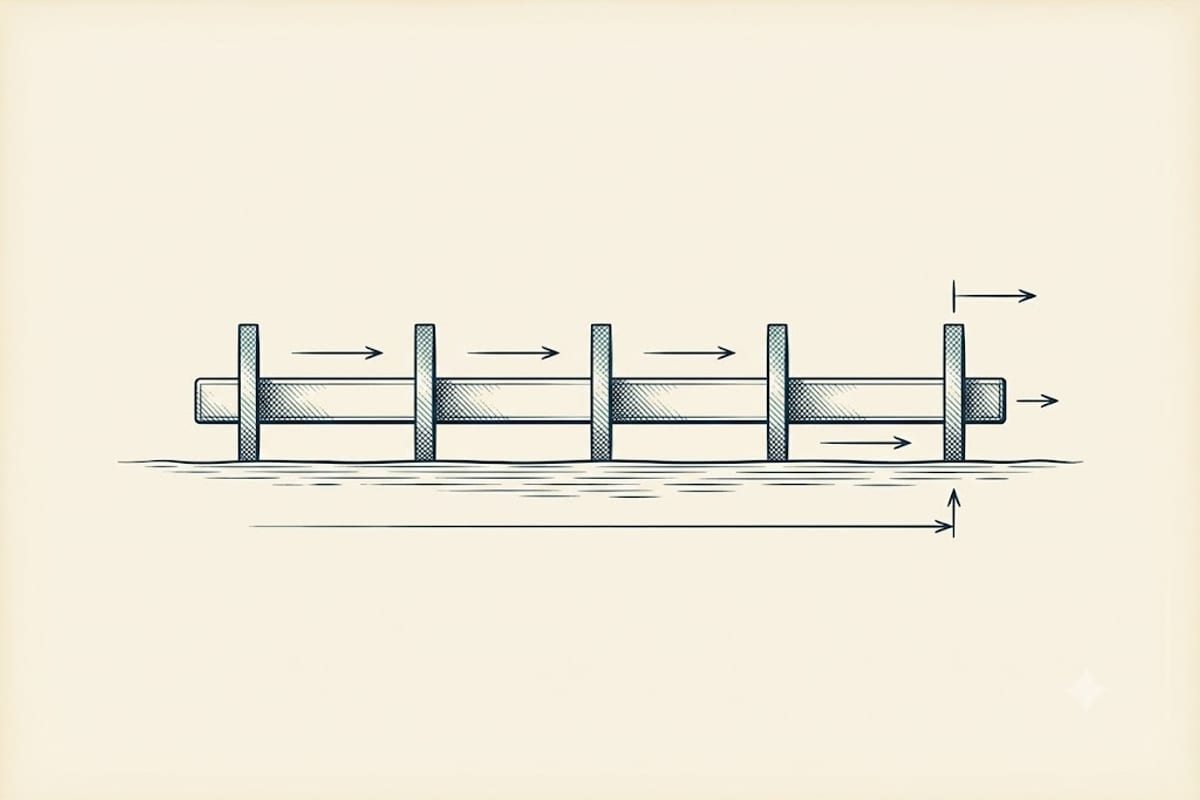
Interval
Every 25 feet is the common choice and it works for most boats. Every 10 metres is the metric equivalent.
Closer intervals give finer control and take longer to mark. Wider intervals are quicker to read but leave you rounding, and rounding on a short scope matters more than rounding on a long one.
Start measuring from the anchor, not from the bow roller, so the number tells you how much is between the anchor and the boat.
Systems that survive
Paint. Cheap, and it wears off the chain where it passes over the gypsy. Requires touching up every season or two, and it is the most common approach for that reason — it is easy to redo.
Coloured cable ties through the links. Highly visible, readable by feel, and they catch on the gypsy and on hands. Trim the tails very short.
Commercial chain markers — moulded plastic inserts sized to the chain. Durable, do not snag, and cost more.
Whipping twine or coloured wire woven through links, which is the traditional method and survives well.
Whatever the system, it has to be readable at night, in the rain, with a torch in your teeth. That rules out anything subtle.
The scheme matters as much as the marks
A colour sequence that has to be counted is a scheme that will be misread at 2am. Two approaches that work:
Count-based — one mark at 25 ft, two at 50, three at 75, and so on. Unambiguous by feel, and it becomes cumbersome past about 125 ft.
Colour-coded — a fixed colour per distance, always in the same order. Faster to read and it requires remembering the order, so write it on a card at the helm.
Whichever is chosen, record it permanently: a laminated card near the windlass, and a note in the ship's papers. A crew member who does not know the scheme cannot use it, and the person who marked the chain is not always the person anchoring.
Rope rode
Rope takes marks differently. Whipping twine, coloured tape under clear heat-shrink, and commercial rode markers all work; paint does not last on nylon.
Mark rope at the same intervals and with the same scheme as the chain so the two read continuously across the splice.
The bitter end
The last few metres before the end of the rode should be marked distinctively — a different colour, or a series of marks — so that running out is visible before it happens.
And the bitter end itself should be secured to the boat, but with something that can be cut. A rode shackled immovably to the boat cannot be slipped in an emergency; one that is not secured at all can be lost entirely.
Checking the marks
Marks move. Chain stretches slightly, marks wear, and a splice gets re-done. Re-measure every couple of seasons by flaking the whole rode out on a dock and walking it.
That exercise also gives you the chance to inspect the whole length, which is the other thing nobody does often enough — the section that sits in the locker year after year is the section least likely to have been looked at.
Why an estimate is always short
Rode paid out over a bow roller looks like more than it is. Chain runs fast, counting links is impossible in practice, and the mind rounds toward the number that means the job is done.
The consistent finding when boats measure for the first time is that they had less rode out than they believed — often substantially less. Which means the scope they thought they were at was not the scope they were at, and the anchoring that has always seemed fine has been running on a smaller margin than assumed.
That is the argument for marking: not that it improves anchoring technique, but that it makes the technique you already have honest.
The windlass counter is not a substitute
Chain counters on windlasses drift. They miscount when the chain jumps the gypsy, they lose their zero when power is interrupted, and they cannot see the rode that went out by hand.
Use one if fitted, and mark the chain as well. The marks are the reference the counter is checked against, not the other way round.