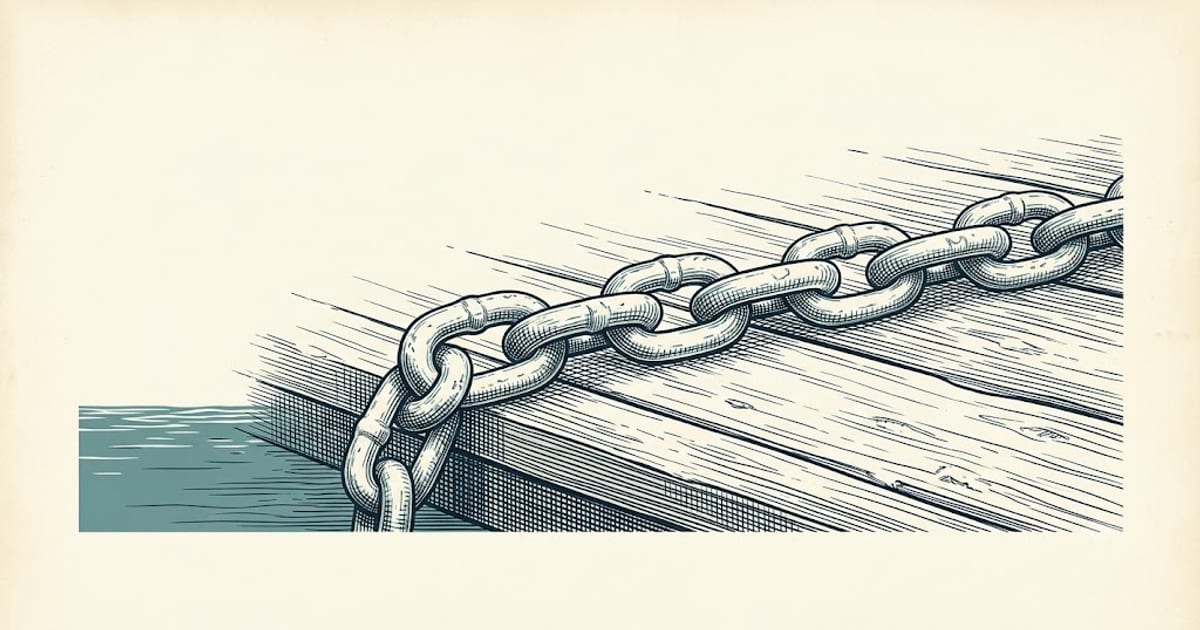
Chain is specified by size, grade and standard, and all three matter. Only the first is obvious.
Size by boat length
| Boat length | Chain |
|---|---|
| Under 28 ft | ¼ in (6 mm) |
| 28–40 ft | 5/16 in (8 mm) |
| 40–50 ft | ⅜ in (10 mm) |
| 50 ft and over | ½ in (12 mm) |
Displacement matters as much as length — a heavy long-keeled cruiser wants a size up from a light modern boat of the same length.
Going oversize is not free. Chain is heavy and it sits in the bow where weight most affects pitching. Two hundred feet of ⅜ in is well over 300 lb.
Grade
Grade is steel strength, and higher grade means more working load for the same size — or the same load at a smaller, lighter size.
- G30 / Proof Coil — common, lowest strength of the three, cheapest.
- G43 / G4 / High Test — the usual cruising choice. Substantially stronger than G30 at the same size.
- BBB — shorter links than proof coil, similar strength. Historically common on windlasses.
Upgrading grade rather than size is the standard way to gain strength without gaining weight, and on a boat where the bow is already heavy it is the right trade.
The gypsy must match the standard
This is where chain choice becomes a safety issue rather than a specification.
The gypsy — the toothed wheel in the windlass — is cut for a specific link pitch and profile. Two chains both marked 5/16 in can have different pitch, because G4 and BBB are different standards.
A mismatch does not fail quietly. The chain rides up out of the gypsy under load, usually while someone's hands are near the windlass. That is an injury risk, not an inconvenience.
Buy chain and gypsy as one decision. If you are replacing chain on an existing windlass, match the standard exactly, not just the size. If you cannot identify what is fitted, measure the pitch over ten links and compare against the gypsy's specification.
Calibrated chain is manufactured to tighter pitch tolerance specifically so it feeds gypsies reliably, and it is worth the premium on any windlass boat.
Galvanised or stainless
Hot-dip galvanised is the default. The zinc sacrifices itself to protect the steel, and when it wears through the chain can be re-galvanised — a fraction of the cost of replacement.
Stainless looks better and does not stain the deck. It is more expensive, and it is vulnerable to crevice corrosion in the low-oxygen conditions inside a chain locker, which is exactly where it spends its life. That corrosion is hidden and gives no warning.
Most cruisers use galvanised for the working rode.
Marking and inspection
Mark the chain at intervals — paint, cable ties or purpose-made markers — so scope is known rather than estimated. Every 25 feet is common. Guessing scope defeats the arithmetic in anchor scope.
Inspect and rotate. Wear concentrates in the first 30 feet, which does the work every time. End-for-ending the chain when that section wears roughly doubles its life.
Look for deformed links, heavy rust where galvanising is gone, and wear at the shackle. Replace the shackle and swivel on a shorter cycle than the chain — they are cheap and they are single points of failure.
FAQ
What size anchor chain for a 35-foot boat?
5/16 inch (8 mm) is typical, sized up for a heavy-displacement boat.
What is the difference between G4 and BBB chain?
G4 is higher strength; BBB has shorter links. Their pitch differs, so a gypsy cut for one will not reliably hold the other.
Why does my chain jump out of the windlass?
Almost always a chain and gypsy mismatch. Nominal size is not enough — the standard and pitch must match.
Is stainless anchor chain worth it?
It looks better but is vulnerable to hidden crevice corrosion inside the chain locker. Most cruisers use hot-dip galvanised, which can be re-galvanised when worn.
How should I mark anchor chain?
At regular intervals, commonly every 25 feet, with paint or purpose-made markers, so scope is known rather than guessed.