Anchor Sizing
Anchor sizing charts are written for a boat lying at anchor overnight in ordinary weather, with someone aboard. That is a much narrower claim than most people read into them, and the difference shows up at three in the morning.
Three things decide holding, in this order
The bottom. A well-set anchor in mud holds many times what the same anchor holds in weed or hard sand. No chart can know what you are lying over, and this is why local knowledge beats specification.
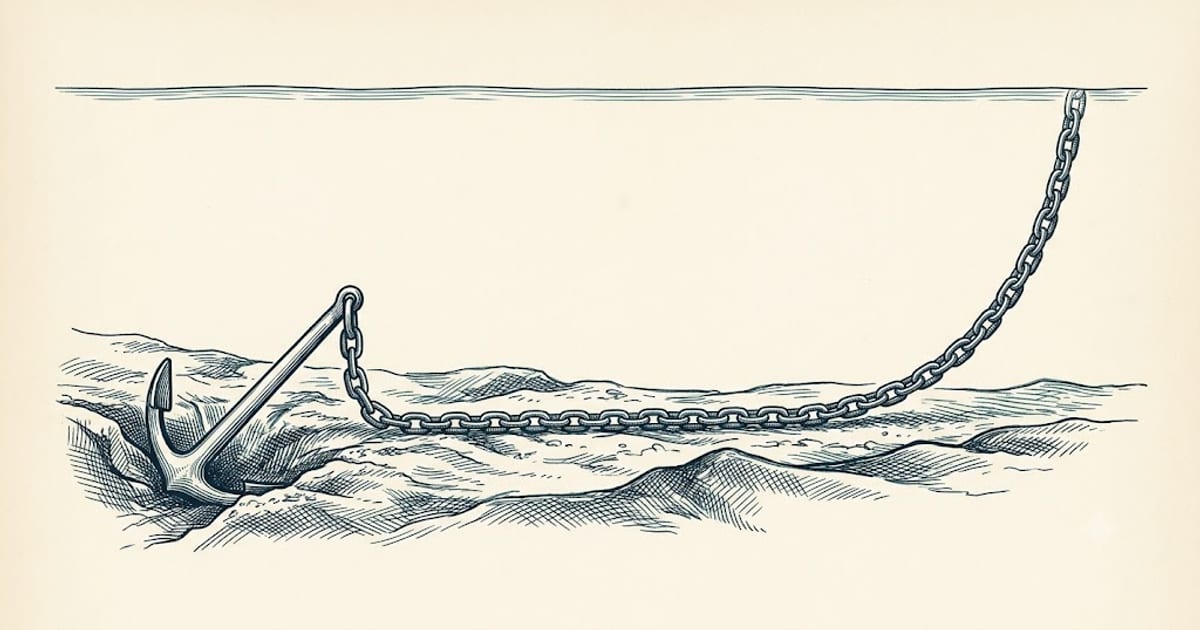
Scope. The anchor holds because of the angle the rode makes at the seabed. Short scope turns a good anchor into a bad one faster than any other single factor.
The anchor itself — which is where most of the discussion goes, and where least of the variance is.
Weight is the least interesting variable
Modern designs — Rocna, Mantus, Spade and their relatives — hold far more per pound than a Danforth or CQR of the same weight, because they set faster and bury deeper. Comparing them by weight compares products that are not comparable.
What weight buys is the ability to punch through weed and to reset when the wind shifts, and those are worth paying for.
The storm anchor is a different question
Everything here assumes normal conditions. A boat left unattended, or riding out a real blow, wants substantially more — the usual guidance is one size up, plus a second anchor deployed.
Set it, then verify it
Back down at low revs until the boat stops moving with the rode taut. Take a transit on shore and watch it for a few minutes.
An anchor that has not been set is a heavy object lying on the bottom, and it will tell you so at the least convenient moment.
6 articles
What size anchor for a 24 foot pontoon boat?
| Recommended anchor | 22 lb fluke (danforth) |
|---|---|
| Chain sizeworking load about 2,600 lb | 1/4″ |
| Chain lengthone boat length minimum, 30 ft floor | 30 ft |
| Rope sizenylon three-strand — the stretch is the shock absorber | 3/8″ |
| Bow height above wateradd this to the depth before working out scope | 4.4 ft |
| Commonly published pontoon rangeconsumer guidance in three brackets by length — shown so you can check this page against it | 15–25 lb |
| — Every anchor type at this length — | |
| Fluke (Danforth)best in sand and mud, poor in weed and rock | 22 lb |
| Plow (CQR)resets well, needs weight to dig in | 34 lb |
| Claw (Bruce)sets easily in most bottoms, lower ultimate hold | 34 lb |
| Modern spadehighest hold per pound, sets fastest | 26 lb |
| — How much rode to carry — | |
| 10 ft of water, 7:1 | 101 ft of rode |
| 20 ft of water, 7:1 | 171 ft of rode |
| 30 ft of water, 7:1 | 241 ft of rode |
| 40 ft of water, 7:1 | 311 ft of rode |
Notes
- Boat type changes the number, and it is windage that does it. A 24 ft pontoon boat works out at 22 lb against 18 lb for a conventional powerboat of the same length — heavier, because a bimini top and a deck full of people turn a pontoon into a sail; windage, not displacement, decides the anchor.
- Scope matters more than weight. A 22 lb anchor on 7:1 scope outholds a 34 lb anchor on 3:1, every time. The angle of pull at the shank is what sets the flukes; short scope pulls up instead of along. If the anchorage is too crowded for 7:1, the honest answer is to move, not to let out less.
- Measure depth from the bow roller, not the water line. On a 24 ft boat the bow sits about 4.4 ft up, so 20 ft of water is really 24.4 ft of rode geometry. Forgetting the freeboard is the most common reason a scope calculation comes out short.
- Chain is not optional. The chain holds the shank down so the pull stays horizontal, and it takes the abrasion on rock and coral that would cut nylon. One boat length is the working minimum, 30 ft here.
- Pontoons swing, and that is the real problem. Two hulls and a flat deck give almost no directional stability at anchor, so the boat sails from side to side and jerks the rode. Many pontoon owners set a second anchor off the stern for exactly this reason — it stops the swing, and it does more for comfort than another ten pounds on the bow.
- Manufacturer tables differ, and they differ for good reasons — hull form, displacement and superstructure all matter and none of them are in a length-only table. Treat this as the size to start from, then round up if your boat is heavy for its length, carries a tall bimini, or lives on an exposed mooring.
Anchor size by boat length and type
81 calculations · browse all
- What size anchor for a 10 foot boat?
- What size anchor for a 10 foot pontoon boat?
- What size anchor for a 12 foot boat?
- What size anchor for a 12 foot aluminum boat?
- What size anchor for a 13 foot boat?
- What size anchor for a 13 foot aluminum boat?
- What size anchor for a 14 foot pontoon boat?
- What size anchor for a 14 foot aluminum boat?
- What size anchor for a 15 foot pontoon boat?
- What size anchor for a 16 foot boat?
- What size anchor for a 16 foot pontoon boat?
- What size anchor for a 17 foot boat?
- What size anchor for a 17 foot aluminum boat?
- What size anchor for a 18 foot boat?
- What size anchor for a 18 foot aluminum boat?
- What size anchor for a 19 foot pontoon boat?
- What size anchor for a 20 foot boat?
- What size anchor for a 20 foot pontoon boat?
- What size anchor for a 21 foot boat?
- What size anchor for a 21 foot aluminum boat?
- What size anchor for a 22 foot boat?
- What size anchor for a 22 foot aluminum boat?
- What size anchor for a 23 foot pontoon boat?
- What size anchor for a 23 foot aluminum boat?
- What size anchor for a 24 foot pontoon boat?
- What size anchor for a 25 foot boat?
- What size anchor for a 25 foot pontoon boat?
- What size anchor for a 26 foot boat?
- What size anchor for a 26 foot aluminum boat?
- What size anchor for a 27 foot boat?
- What size anchor for a 27 foot aluminum boat?
- What size anchor for a 28 foot pontoon boat?
- What size anchor for a 29 foot boat?
- What size anchor for a 29 foot pontoon boat?
- What size anchor for a 30 foot boat?
- What size anchor for a 30 foot aluminum boat?
- What size anchor for a 32 foot boat?
- What size anchor for a 32 foot aluminum boat?
- What size anchor for a 33 foot pontoon boat?
- What size anchor for a 33 foot aluminum boat?
- What size anchor for a 34 foot pontoon boat?
- What size anchor for a 35 foot boat?
- What size anchor for a 35 foot pontoon boat?
- What size anchor for a 36 foot boat?
- What size anchor for a 36 foot aluminum boat?
- What size anchor for a 40 foot boat?
- What size anchor for a 40 foot aluminum boat?
- What size anchor for a 50 foot pontoon boat?
Anchor size chart by type
4 calculations · browse all
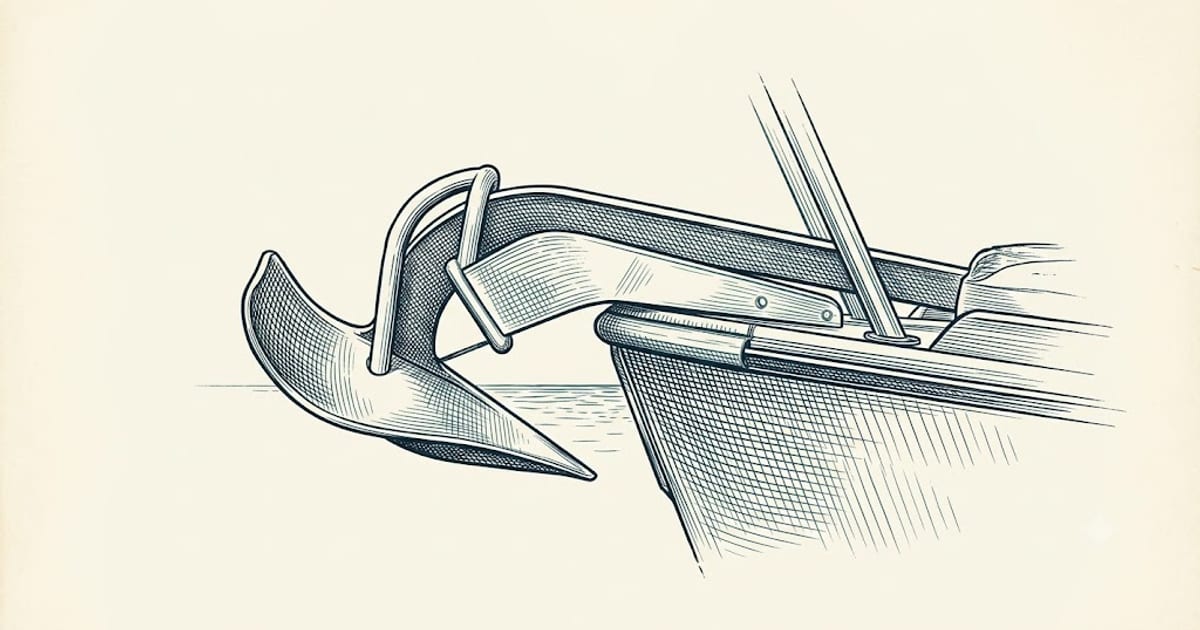 New-Generation Anchors Against the Classics: What the Concave Fluke Changed
The difference is not marketing. A concave fluke digs deeper under load where a plow tends to plane, and re-setting after a wind shift is where the gap is widest.
 "Anchor Weight per Foot: The Rule of Thumb, and Where It Breaks"
A pound per foot is a rule that works in the middle of its range and fails at both ends, for two different reasons.
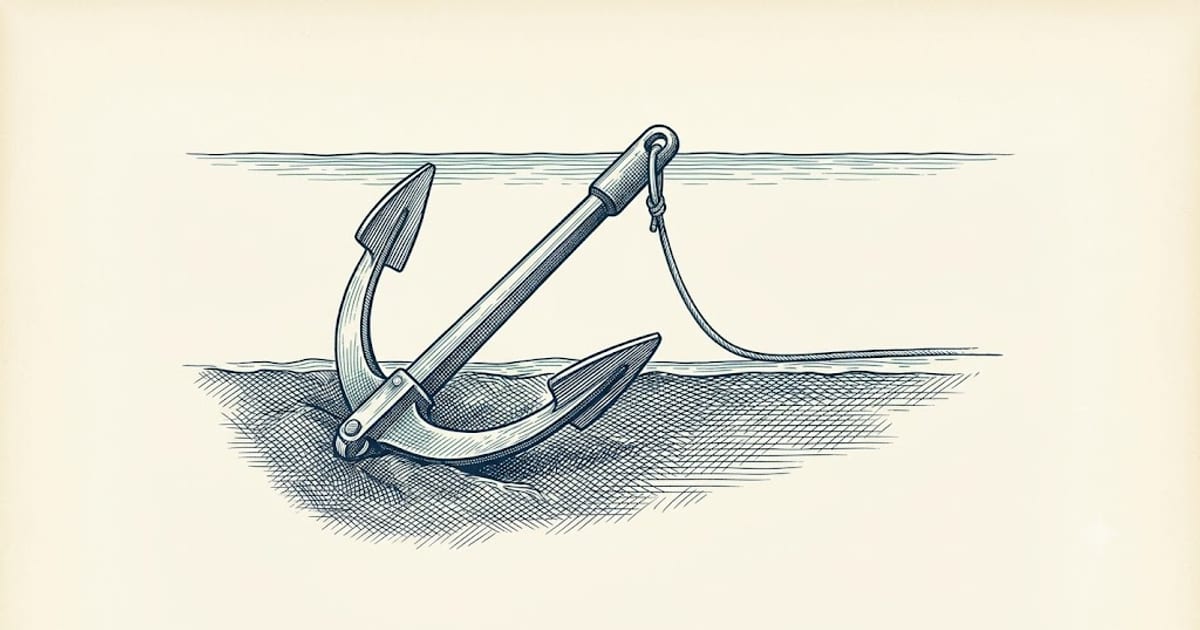 Fluke Anchors: Where They Excel, and the Two Bottoms That Defeat Them
The fluke anchor has the best holding-to-weight ratio in common use and two well-known failure modes. Both are about the bottom, not the size.
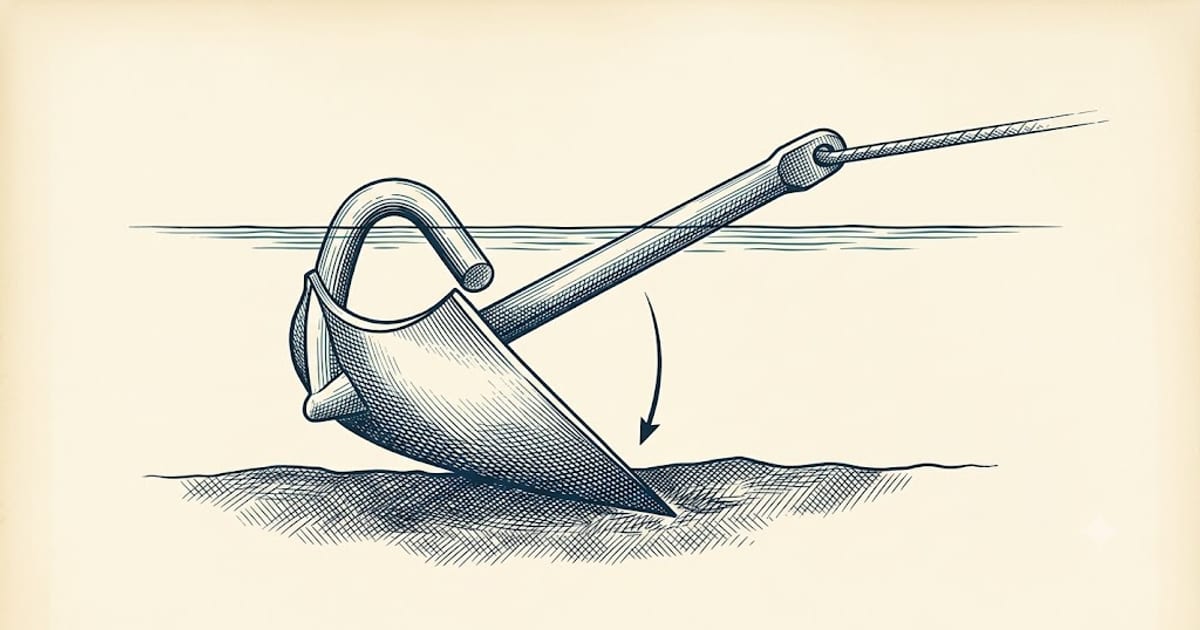 Reading a Modern Scoop Anchor Chart, and What Its Small Print Assumes
Modern anchor charts look interchangeable and are not. The difference between them is usually one line of small print about assumed wind speed.
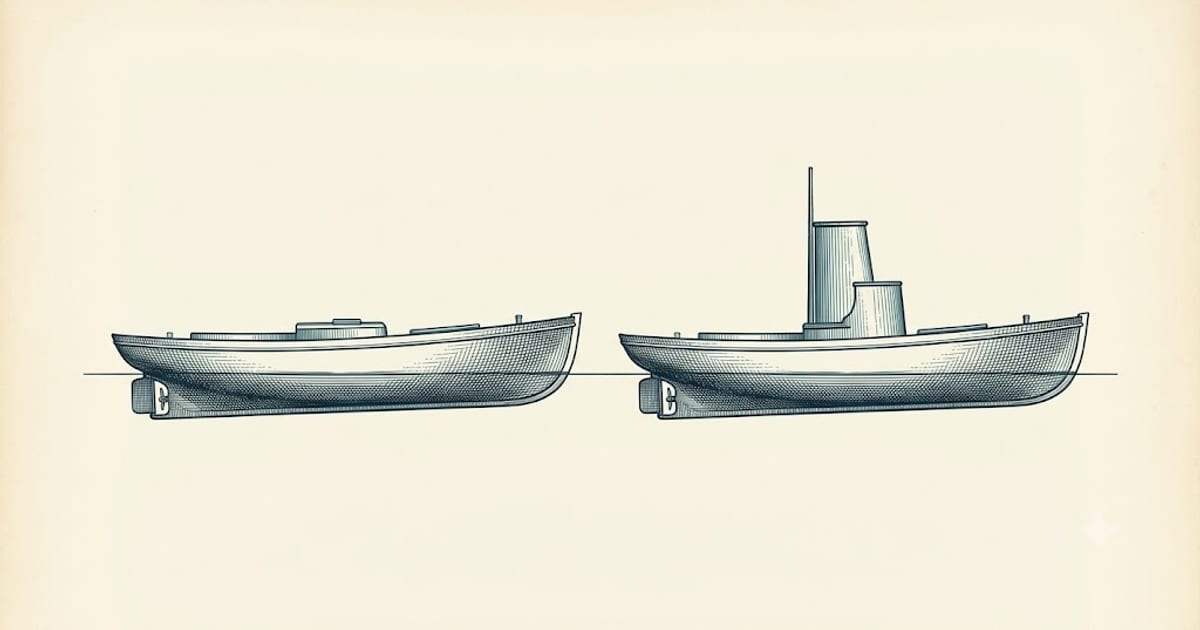 Anchoring a 24-Foot Boat: The Questions the Chart Cannot See
Two 24-foot boats can need different anchors. Length is the index every chart uses and the one variable that tells you least about the load.
 Anchor Sizing for Boats: Why Length Alone Cannot Answer It
Every anchor chart is indexed by boat length, and every one of them carries conditions in the small print. The load your ground tackle has to hold does not rise with length. It rises with length squared.