Seabed Types
An anchor does not have a holding power. It has a holding power in a given bottom, and the same anchor can be the best and the worst choice on the same chart.
What the bottom decides
| Bottom | Holds by | Fails by |
|---|---|---|
| Sand | Fluke area buried in a dense medium | Rarely, once set |
| Soft mud | Sheer volume of displaced material | Dragging slowly, invisibly |
| Clay | Suction and penetration | Refusing to penetrate at all |
| Weed / grass | Nothing, until the fluke reaches soil | Sitting on top of the mat |
| Rock | Hooking a feature | Not hooking, or never releasing |
Sand is where most published holding-power figures are measured, which is why the numbers on a box flatter every anchor equally and rank none of them for the bottom you are actually in.
The two failure modes are opposites
In soft mud the danger is a large-area anchor that cannot generate enough pressure to bury and instead ploughs along at a steady walking pace — a drag that produces no jolt and no noise, which is exactly why it goes unnoticed until the anchor alarm sounds.
In weed the danger is the reverse: an anchor with a broad, blunt tip skates over the mat and never touches soil. A narrow, heavy tip cuts through.
An anchor optimised for one is compromised for the other. That is the trade-off behind every anchor-type argument, and it has no universal winner.
Read the chart before you choose the anchor
The bottom type is printed on the chart, and it is the single most useful thing on it for this decision. Checking it takes seconds and changes which anchor comes off the bow roller.
The pages below cover the types, the setting technique that proves you are held, and what to do when the anchorage is full.
4 articles
 Anchoring in Weed — The Anchor Sits on Top and Looks Set
A weed anchorage gives the most convincing false set there is. The boat sits still all evening and drags at three in the morning when the wind shifts.
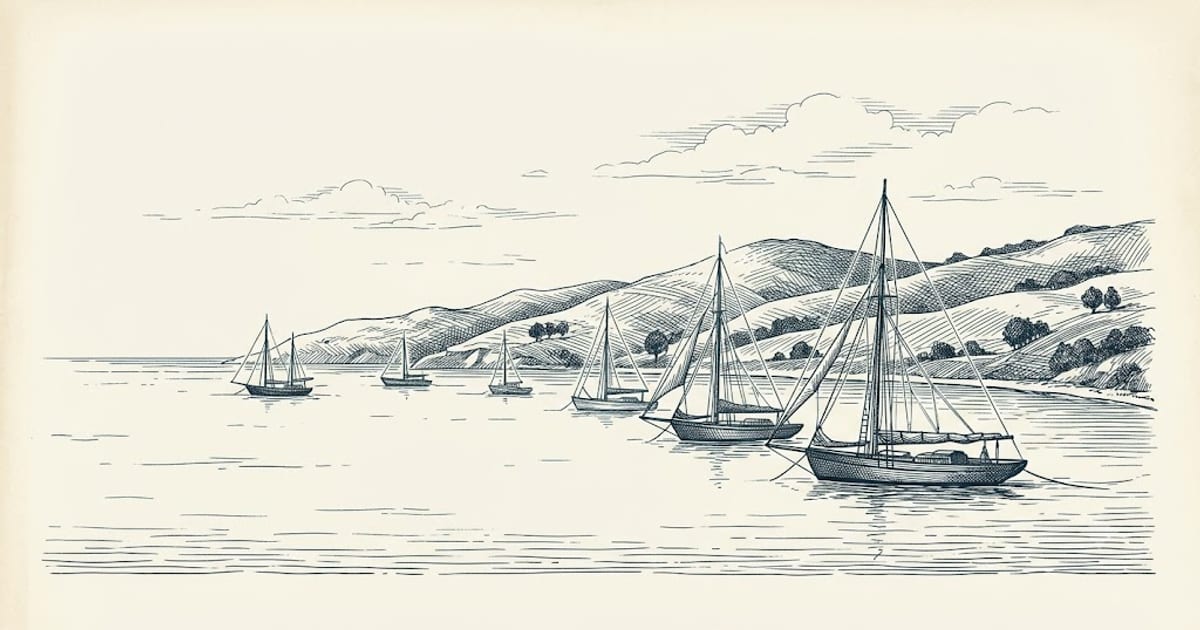 Anchoring in a Crowded Anchorage: Swinging Circles and Who Moves
Two boats that were comfortably apart at dusk can touch at midnight, because they were never swinging on the same radius.
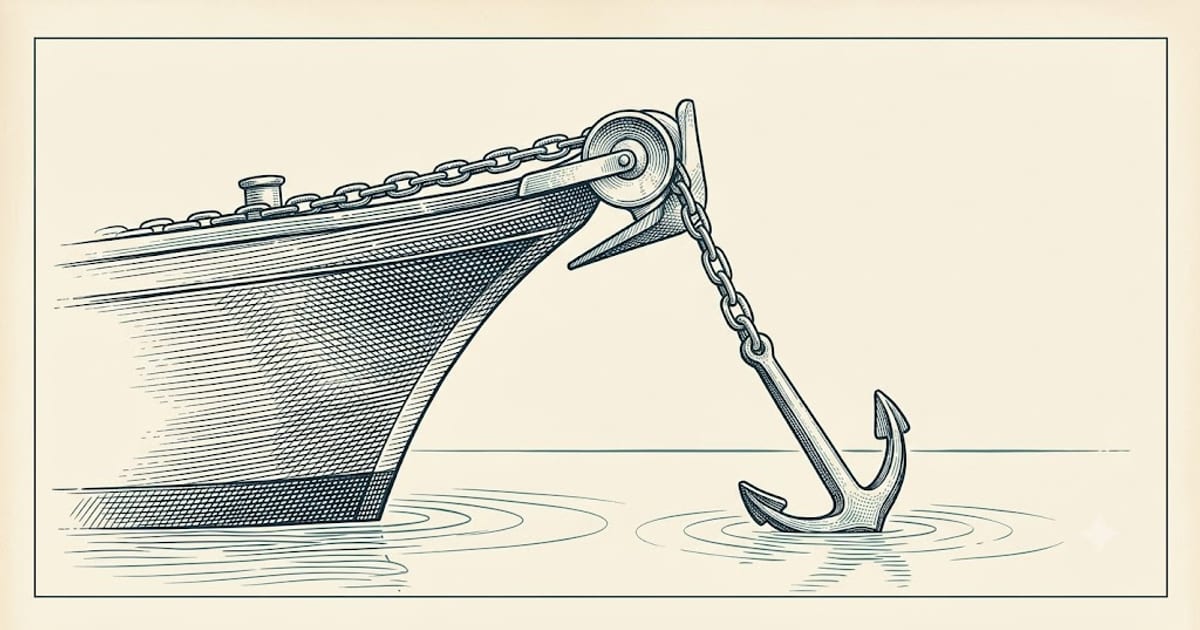 Setting an Anchor Properly: Lower It, Back Down Slowly, Then Prove It Holds
Most dragging happens because the anchor never set, not because it came loose. The difference is a two-minute procedure at the start.
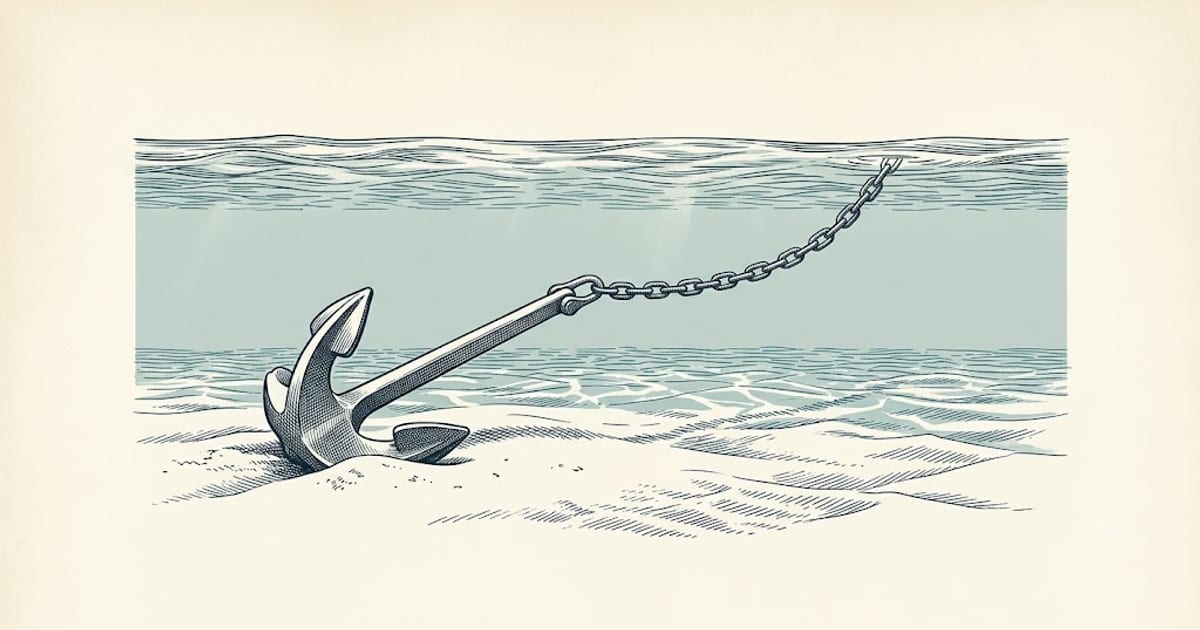 Anchor Types by Bottom: Where Each One Holds and Where It Slides
The same anchor can hold ten times more in one bottom than another. Weight is the number on the chart; the seabed is the number that decides the night.