Windlass & Gear
Ground tackle is a chain of components, and the failures cluster in the cheap ones.
Sizing a windlass
The working load is not the anchor's weight. It is the anchor plus all the chain hanging in the water plus the mud stuck to the anchor plus the drag of the boat, and the accepted rule is that a windlass should be rated at three times the total weight of the ground tackle it lifts.
Then one hard constraint: the gypsy must match the chain exactly — size and grade. A gypsy cut for 5/16 G4 will not run 5/16 BBB, because the two grades have different link dimensions at the same nominal size. Mismatched, the chain rides up and jumps, which is dangerous under load and destroys both parts.
| Component | Sized by | Common error |
|---|---|---|
| Windlass | 3× ground tackle weight | Counting only the anchor |
| Gypsy | Chain size AND grade | Assuming size is enough |
| Cabling | Voltage drop over the run | Sized like a normal circuit |
| Snubber | Boat displacement | Omitted entirely |
A slow windlass is usually electrical
A windlass is a high-current motor at the far end of the longest DC run on the boat. Cable that would be generous anywhere else drops enough voltage over that distance to starve the motor, and a starved motor turns slowly and gets hot.
The diagnosis is a voltage reading at the motor under load, not at the panel. If it has sagged, the answer is copper, not a new windlass.
The snubber is the part that gets skipped
All-chain rode has almost no stretch. Every gust arrives at the anchor and the bow fitting as a shock load, and the windlass is not designed to take it — a snubber is what carries the load once the anchor is set.
It is the cheapest item in this category and the one whose absence damages the most expensive ones.
5 articles
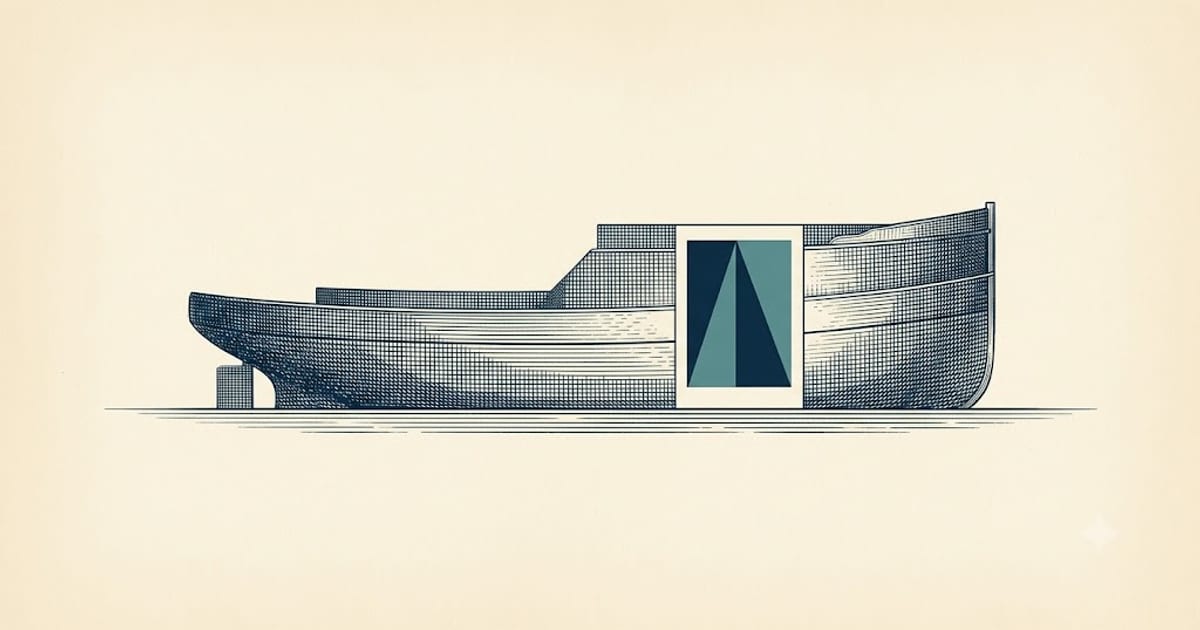 Chain Locker — Depth, Drainage, and the Pile That Falls Over
A windlass that stops near the end of the retrieve is almost never the windlass. It is the chain reaching the top of its own pile.
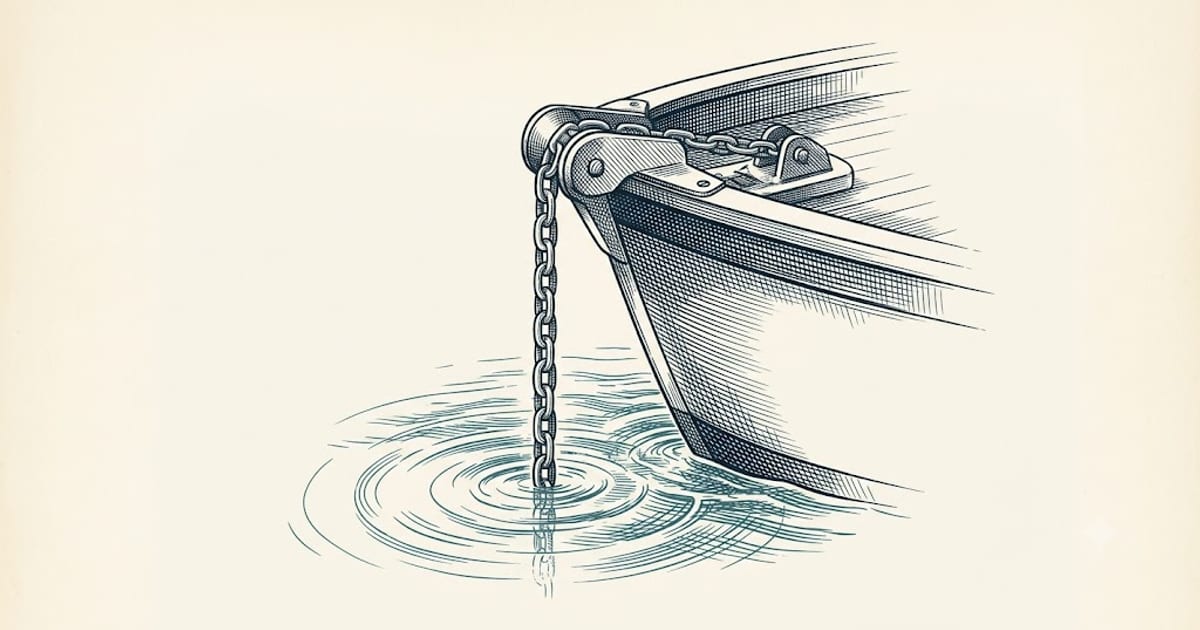 Freeing a Stuck Anchor: Use the Boat, Not the Windlass
The windlass will pull until something breaks, and what breaks is the windlass or the deck it is bolted to. The boat itself has far more force available and costs nothing.
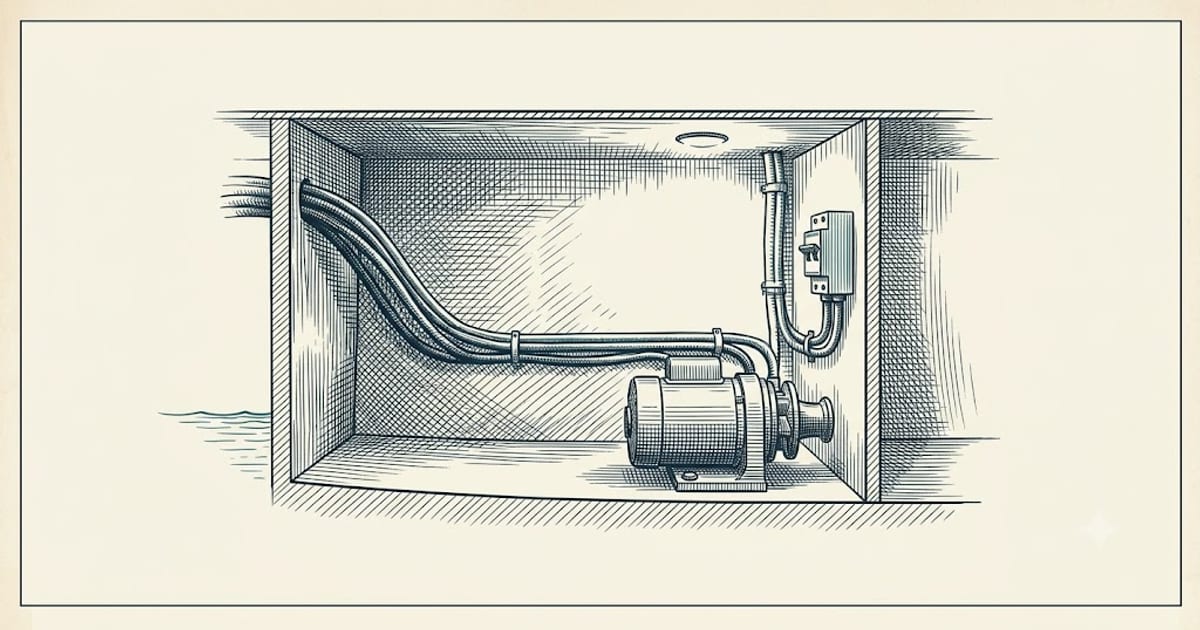 A Slow Windlass Is Usually a Wiring Problem, Not a Motor Problem
The most common windlass fault is diagnosed as a tired motor and fixed by replacing a cable. The symptom points at the wrong end of the boat.
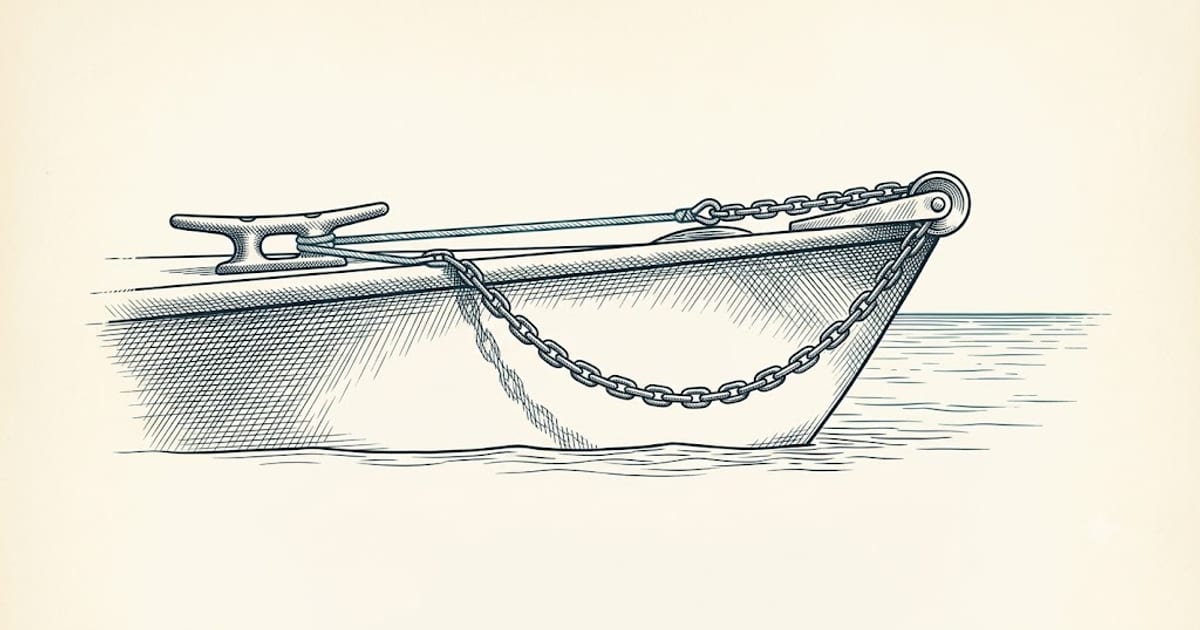 Snubbers and Bridles: The Cheapest Piece of Ground Tackle and the Most Skipped
A snubber costs less than almost anything else on the bow and prevents the load path that breaks the expensive parts.
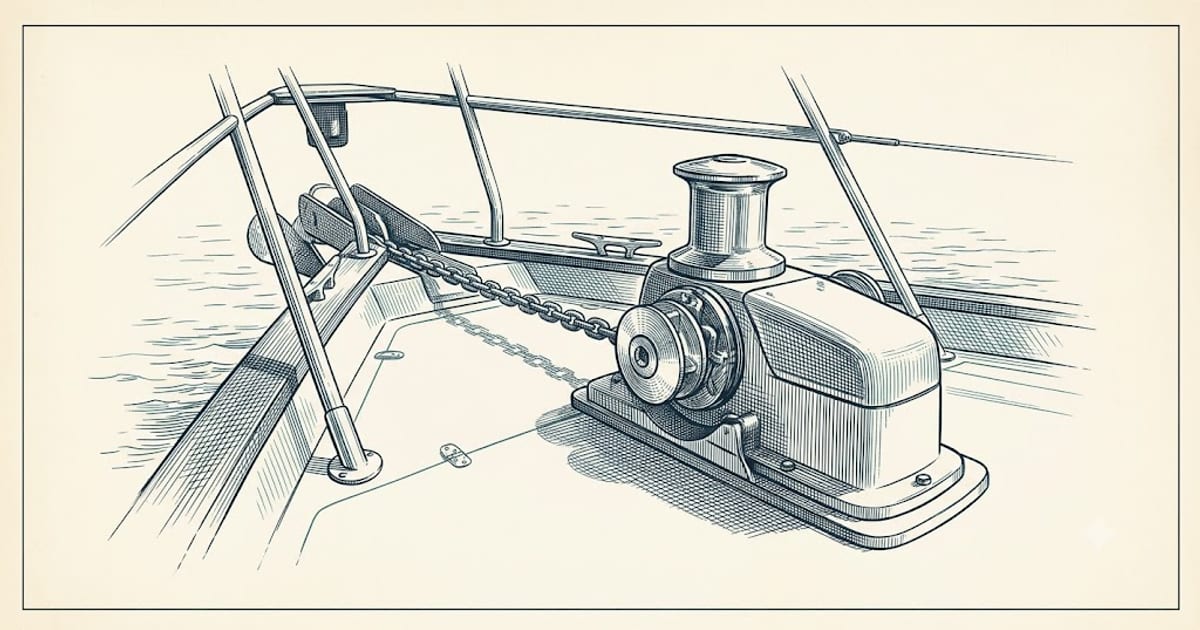 Sizing a Windlass: Three Times the Ground Tackle, and the Gypsy That Must Match Exactly
A windlass is sized against everything hanging off the bow, not against the anchor. And the part that most often goes wrong is not the motor — it is a chain standard mismatch measured in fractions of a millimeter.