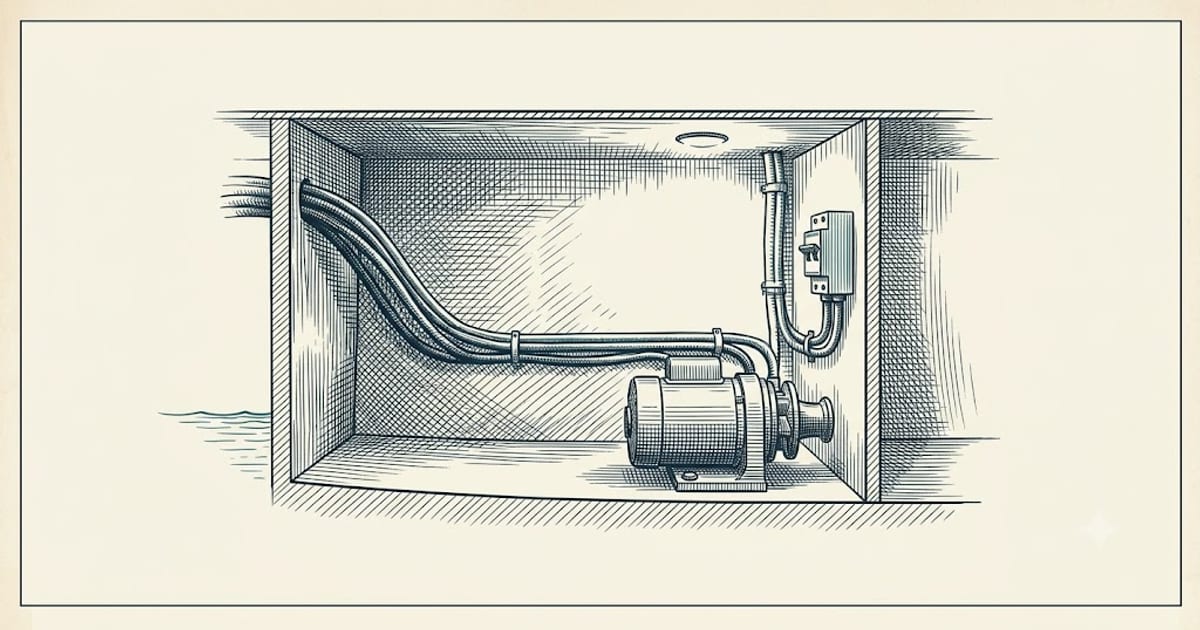
Windlasses draw enormous current — hundreds of amps at peak on larger units — from a battery usually at the opposite end of the boat.
Current times distance is voltage drop. Undersized cable does not stop the windlass working; it makes it turn slowly, work harder and get hot. That reads as a weak motor, and people buy a bigger windlass to fix a cable.
Check the wiring first
Cable size must suit the peak draw and the round-trip run length. A 40 ft run to the bow and back is 80 ft of conductor, and cable sizing tables are unforgiving over that distance. Manufacturers publish a table; use theirs rather than a general rule.
Connections. Corroded or loose terminals add resistance exactly like undersized cable. A terminal warm after use has been found.
The breaker or fuse must be rated properly and located near the battery. An undersized breaker trips under load, which looks like the windlass cutting out.
Battery condition. A tired battery sags under a heavy load. Many boats justify a dedicated bow battery, which shortens the run and solves the problem at its source.
Measure voltage at the windlass while it runs. If it has dropped substantially from battery voltage, you have found the fault and it is not the motor.
Maintenance that prevents failure
Rinse with fresh water after use. Salt in the gypsy and clutch is what eventually seizes them.
Grease the clutch cone annually. A seized clutch means you cannot free-fall the anchor or release under load.
Check the through-deck seal. Water finding its way into the motor from the deck fitting is a common way windlasses die, and it happens invisibly.
Service the gearbox to the manufacturer's schedule.
Check mounting bolts and backing plate. The windlass sees snatch loads whenever the snubber is not used — and that is exactly why the snubber matters. See snubbers and bridles.
The windlass is not a cleat
Repeating it because it is the most common way windlasses are damaged.
The windlass moves chain. It is not designed to hold the boat's anchoring loads for a night. Once anchored, take the load onto a snubber or bridle made off to a cleat, with slack chain into the windlass.
Boats that skip this crack deck fittings and strip gearboxes, and the failure appears months later with no obvious cause.
Practise manual recovery
Every windlass has a manual override — usually a socket for a winch handle. It is slow, and it is what you have when the electrical system fails with the anchor down.
Find the handle and try it before you need it. Boats routinely carry an override socket nobody has ever used and a handle nobody can locate.
The other manual option is motoring the boat forward over the anchor while taking in slack by hand, which is easier than winding but needs crew.
When it really is the motor
Brushes wear, and a windlass that runs intermittently, sparks, or smells hot after correct wiring checks may need them replaced — a serviceable item on many units rather than a reason to replace the whole windlass.
Sizing a replacement, if it comes to that, is in windlass sizing.
FAQ
Why is my windlass so slow?
Usually voltage drop from undersized cable over a long run, or corroded connections. Measure voltage at the windlass while it runs.
What size cable does a windlass need?
Sized for peak draw and the round-trip run length, which is twice the distance to the bow. Use the manufacturer's table.
Can I anchor overnight using the windlass to hold the chain?
No. Take the load onto a snubber or bridle at a cleat and leave slack chain into the windlass.
How do I recover the anchor if the windlass fails?
Use the manual override socket with a winch handle, or motor forward over the anchor while taking in slack by hand. Practise before you need it.
What maintenance does a windlass need?
Fresh water rinse after use, annual clutch cone greasing, checking the through-deck seal, and servicing the gearbox on schedule.