
An anchor alarm compares the boat's position against a stored point and sounds when the distance exceeds a set radius. Both inputs are routinely set wrong.
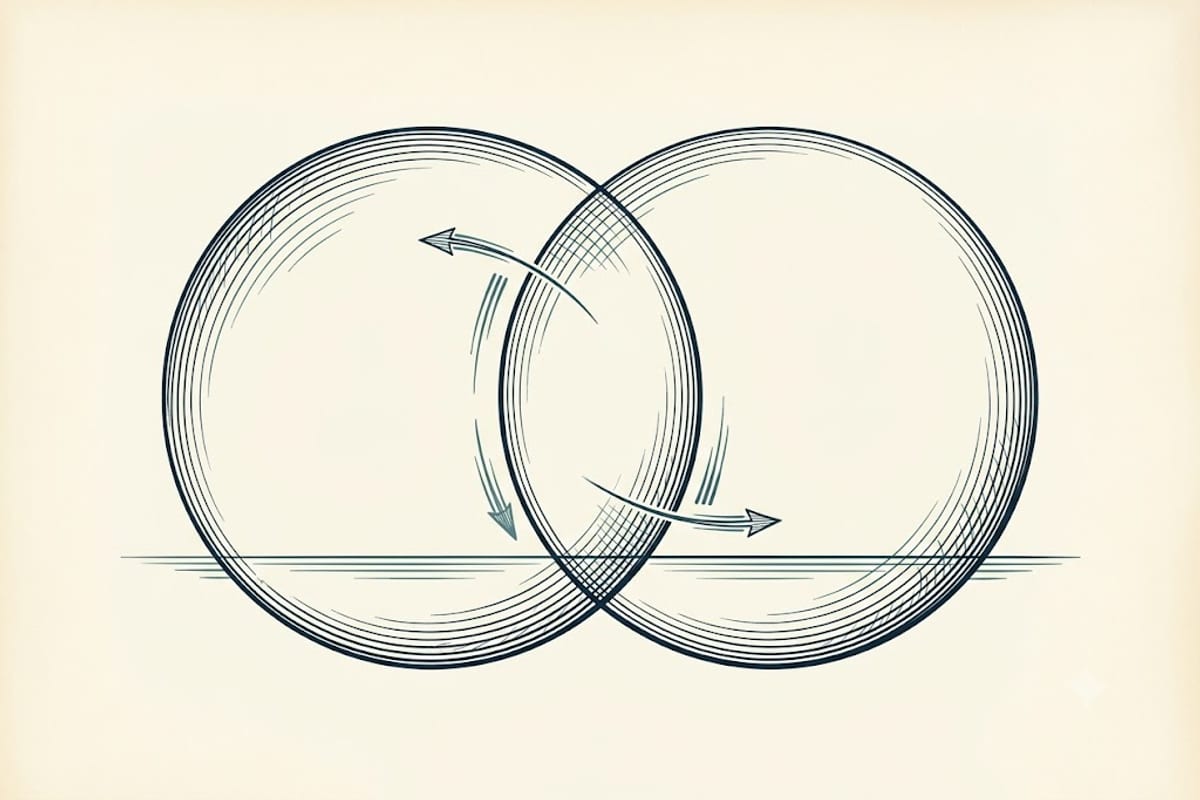
The centre should be the anchor
Most apps offer to set the alarm at the current position, which is the boat — already lying downwind or downtide of the anchor by the full horizontal reach of the rode.
Centred there, the permitted circle is offset from the true swinging circle by that distance. On one side it allows far more movement than intended; on the other it triggers on a normal wind shift.
Set the centre when the anchor goes down, before backing away. Every decent app has a "drop anchor here" function for exactly this. Where the app does not, mark the position manually at the moment the anchor touches bottom.
The radius
radius = horizontal reach of rode + boat length + GPS margin
Horizontal reach is slightly less than rode length because the rode is not flat, but using rode length is the safe simplification.
Add the boat's length, because the GPS antenna is not at the bow. Then add a margin for GPS scatter — commonly 10 to 20 metres, and more with a phone than with a fixed receiver.
A radius smaller than this triggers on normal swinging. A radius much larger than this permits real dragging before it notices. Neither is useful, and the first is worse because it teaches you to ignore the alarm.
The phone problems nobody mentions
The screen sleeps and the app is suspended. Several phone operating systems suspend background apps aggressively, and an alarm that is not running does not sound. Test it — set a tiny radius, walk fifty metres down the dock, and confirm it actually goes off with the screen locked.
The battery dies. Plug the phone in.
Silent mode. Check that the alarm overrides it, because most notification sounds do not.
GPS scatter at anchor looks like slow movement, and a tight radius plus scatter produces false alarms all night.
What an alarm cannot do
It cannot tell the difference between dragging and swinging to a new wind direction. Both move the boat toward the edge of the circle. Only one is a problem.
It cannot detect a slow drag that stays inside the radius — which is the drag most likely to end against something.
It cannot see the boat that anchored too close to you after you turned in.
Transits are still the best detector
Two fixed objects ashore lined up with each other, viewed from a consistent place on the boat, detect very small movement immediately and cost nothing.
At night, two shore lights work the same way. Check them when you turn in, and any time you wake.
The combination worth using is a transit for sensitivity and an alarm as a backstop for when you are asleep — not the alarm alone.
When it does sound
Look outside before touching anything. Establish whether the boat has moved relative to the shore or merely swung, check the depth, and check the transits.
Genuine dragging usually shows as increasing depth, a jerky feel on the rode, and shore lights moving steadily rather than settling. The response is engine on, someone at the bow, and recovering the anchor to reset rather than paying out more rode — an anchor that has broken out does not reset itself by being given more scope.
Setting it as a crew habit
The alarm is worth building into the anchoring routine rather than being an afterthought at bedtime. The sequence that works: drop, mark the position in the app at that moment, back down and set, then once settled enter the radius from the rode actually paid out.
Doing it in that order means the centre is right and the radius reflects reality, and it takes about twenty seconds. Doing it at bedtime means guessing at both.
Where more than one person is aboard, agree who is on anchor watch and what wakes them. An alarm on a phone in a closed cabin at the other end of the boat is not a watch.