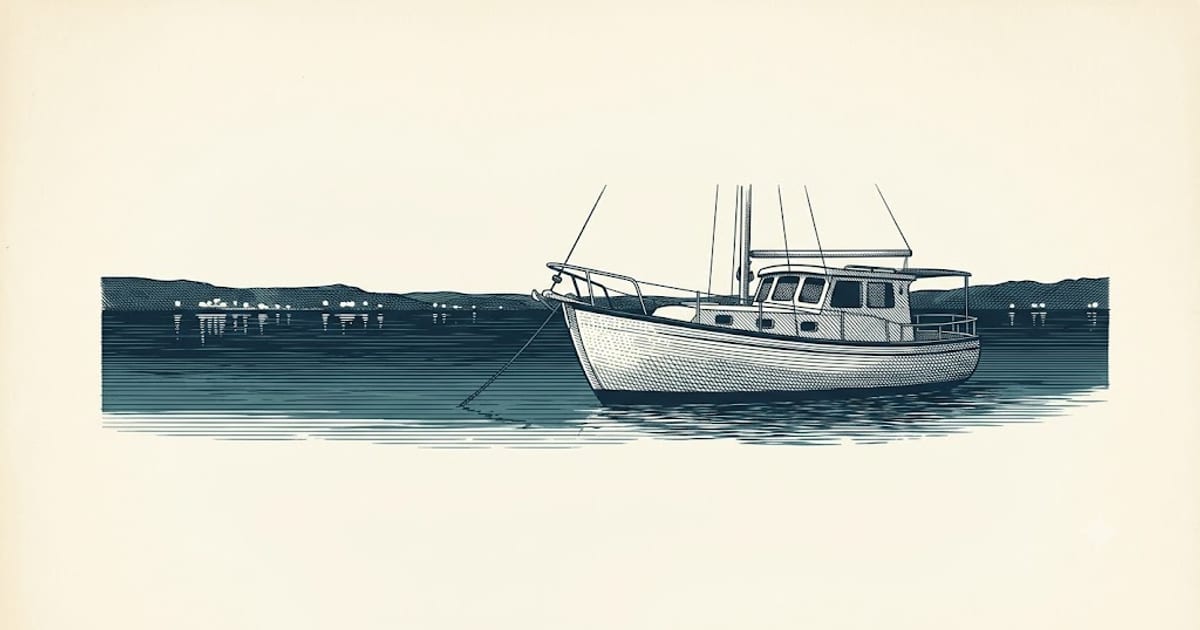
A boat at anchor is never still. It sails from side to side, swings with the tide, and surges on the rode. Every one of those looks alarming at three in the morning.
Dragging is different in one specific way: the boat moves and does not come back.
Two checks
A transit ashore. Two fixed objects in line — a light in front of a headland, a tree against a building. If they stay lined up, you are stationary. If they separate steadily, you are moving. This is more sensitive than any single reference and it works in seconds.
Depth. Watch the sounder. Dragging usually means moving toward deeper or shallower water, and a steady trend in one direction is a strong signal. In a bay that shelves, it is often the first thing to change.
A GPS anchor alarm helps, but wander at anchor triggers false alarms and the real thing is easy to dismiss after the third. Use it as a wake-up, then confirm with a transit.
In order
1. Start the engine. Before anything else. It costs nothing and you may need it in seconds. Check nothing is over the side first.
2. Get everyone on deck with lifejackets, particularly at night.
3. Assess where you are heading. Open water astern means time. A lee shore, a moored boat, or shallows means act now.
4. Motor gently ahead to take the load off the rode. This alone sometimes lets the anchor reset as it settles into fresh bottom.
5. Decide: more scope, or re-anchor.
More scope, or start again
Pay out more rode if you have swinging room, the bottom is good, and the anchor is likely still buried but at too steep an angle. Rising wind on marginal scope is the classic case. It is quick and it often works — the geometry behind it is in anchor scope.
Re-anchor if the anchor has broken out, the bottom is weed or hard sand, or you are running out of room. A broken-out anchor lying on its side is not going to reset itself while being dragged.
Re-anchoring is the right answer more often than people accept, because it means recovering the rode in the dark in a rising wind. Doing it at midnight is better than doing it at two after hitting something.
Where you re-anchor
Move somewhere with better holding, more room and more shelter. Do not re-set in the same spot that just failed — if the anchor dragged there once, the bottom is telling you something. Anchor types by bottom are in best anchor for sand vs mud.
Set it properly rather than quickly: lower, drift back, back down progressively, confirm with a transit. The sequence is in how to set an anchor.
Preventing the repeat
Most dragging traces back to the setting. An anchor that dragged at 3 a.m. usually never set at 6 p.m. — it held against a light load and released at the first real pull.
The other repeat cause is a wind shift onto a bottom the anchor was never buried in. Check the forecast for shifts before choosing a spot, not only for wind strength.
FAQ
How do I know if my anchor is dragging?
Line up two fixed objects ashore. If they separate steadily, you are moving. Watch the depth sounder for a steady trend as well.
What should I do first if my anchor drags?
Start the engine. Then get crew on deck with lifejackets and assess what is downwind of you.
Should I let out more rode or re-anchor?
More rode if you have room and the anchor is probably still buried. Re-anchor if it has broken out, the bottom is poor, or room is running short.
Why did my anchor drag in the night?
Most often it never set properly, or a wind shift moved the pull onto ground the anchor was not buried in.
Are GPS anchor alarms reliable?
They are useful as a wake-up but produce false alarms from normal swinging. Confirm with a transit ashore.